 Muhammad Shahzaib Haider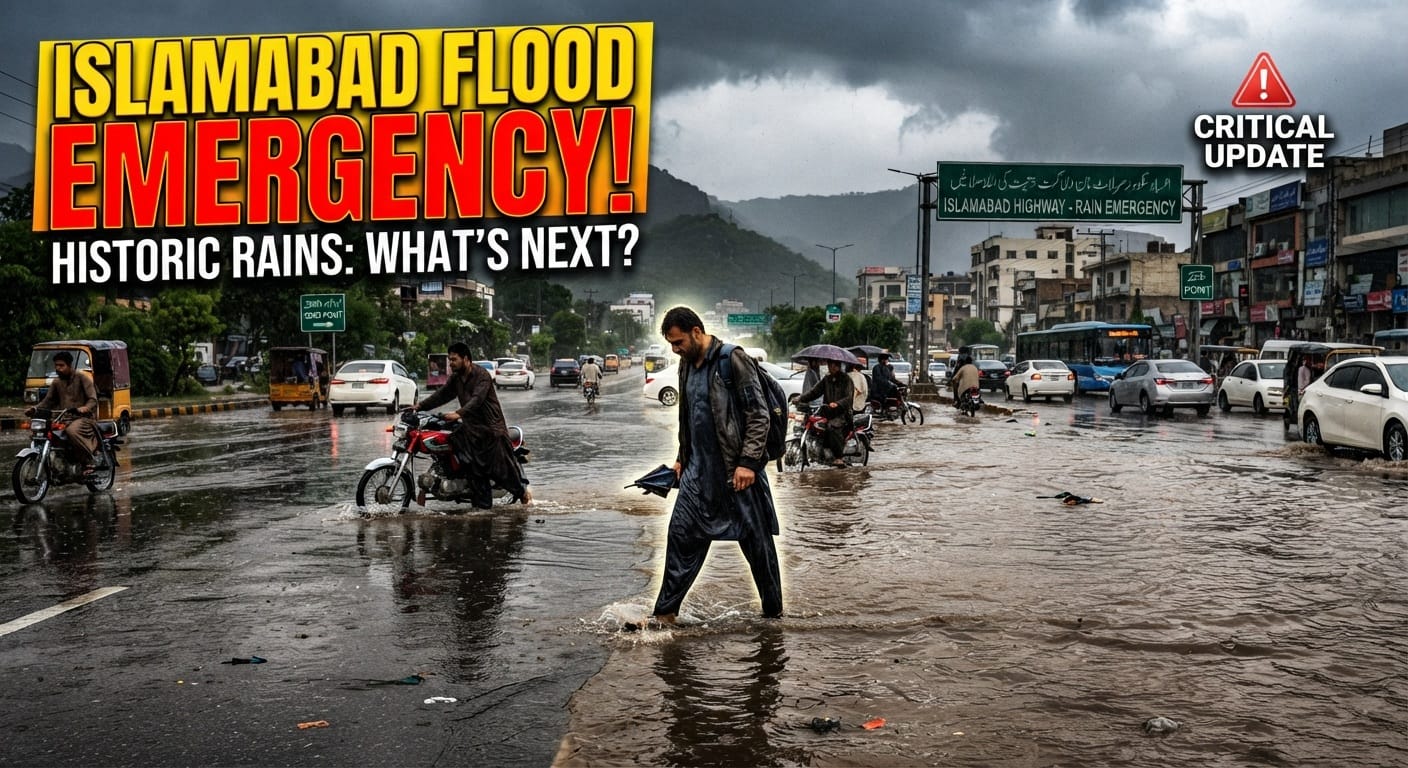
Islamabad Rain Emergency: The Hidden Danger You’re Ignoring
This is no longer simply a question of “Will it rain today?” The more critical question for Islamabad and Rawalpindi residents, commuters, and business owners during this ongoing Islamabad rain emergency is: How severe could the next spell be, and what should you do before it arrives?
🌧️ What Happened in Islamabad?
The twin cities experienced exceptionally heavy rainfall during the ongoing monsoon spell, bringing key urban sectors to a temporary standstill.
-
High Precipitation Volumes: Reports indicated that around 150 mm of rain was recorded in Islamabad’s E-11 area, while Rawalpindi received approximately 200 mm during the period.
-
Immediate Urban Inundation: The sheer intensity of the rainfall created immediate urban-flooding problems. Low-lying areas were flooded, roads became difficult to navigate, and water accumulated dangerously in basements and commercial complexes.
-
Leh Nullah Status: The situation became critical around Leh Nullah in Rawalpindi, where water levels rose sharply, reaching critical monitoring marks at Kattarian and Gawalmandi.
Why these numbers matter: Urban flooding isn’t just about total rainfall volume. Intensity, drainage capacity, soil saturation, local topography, and stormwater system upkeep dictate how fast water chokes a city during an Islamabad rain emergency. For ongoing coverage on regional developments, explore our latest updates on Business Times PK.
⚠️ Is More Rain Expected?
Yes—but forecasts must be interpreted carefully.
The Pakistan Meteorological Department (PMD) has indicated that rain, wind, and thunderstorms remain expected across upper parts of Pakistan, with weather monitoring systems actively tracking heavy-rainfall risks. You can review live regional bulletins directly through the official Pakistan Meteorological Department Portal. Recent weather advisories highlight the persistent threat of flash flooding in vulnerable streams and nullahs across the region.
However, a weather warning doesn’t mean uniform, continuous heavy downpours. Systems can shift or weaken rapidly. The key takeaway for residents and businesses is simple: The risk period is not over just because the heaviest rain temporarily stopped. September frequently sees active monsoon showers alongside western disturbances bringing late-month downpours.
🏙️ Why Does Islamabad Flood So Quickly?
One of the biggest misconceptions is that urban flooding requires days of continuous rain. It doesn’t. A short window of extreme, concentrated rainfall can overwhelm drainage networks faster than municipal channels can evacuate the water.
This vulnerability in Islamabad stems from a unique combination of factors:
-
Low-lying residential pockets and commercial sectors
-
Natural streams and stormwater drainage pathways
-
Sloped topography that accelerates runoff velocity
-
Rapid urban development and extensive asphalt paving that drastically reduce natural soil water absorption
The National Disaster Management Authority (NDMA) has repeatedly flagged urban flooding and extreme weather as major seasonal hazards, warning that localized heavy rainfall directly threatens transport networks, utilities, public services, and local trade. Official situation reports and disaster preparedness directives can be monitored via the NDMA Official Website. To understand how local businesses adapt during disruptions, read our insights on Business Times PK.
🛡️ Actionable Safety: What Residents & Business Owners Should Do Now
Emergency Quick-Contacts & Rules:
1. Protect Basements and Ground Assets
Commercial offices and residential buildings with underground parking or basements need proactive safeguards. Move electronic gear, stock inventory, and critical documents to higher floors immediately, and ensure sump pumps are fully operational.
2. Safeguard Commutes
If you travel daily between Islamabad and Rawalpindi, check live weather updates before stepping out. If caught in a sudden downpour, pull over to a safe elevated location rather than gambling with flooded underpasses.
3. Rely on Official Channels
Avoid forwarding unverified or outdated emergency clips on social media. Stick strictly to alerts issued by the PMD and NDMA.
📈 The Business Perspective: Resilience Over Reaction
At Business Times PK, our focus goes beyond reporting the weather—we analyze what climate volatility means for local commerce, supply chains, employee safety, and real estate values in the twin cities.
Extreme weather events serve as a stark reminder that infrastructure resilience is vital for economic continuity. Whether it’s retail businesses managing inventory risks or employers implementing flexible remote work policies during heavy rain alerts, proactive planning protects both lives and livelihoods.
Stay safe, stay prepared, and keep following Business Times PK for trusted, localized updates that matter to your everyday life and business success.
